Monitor gas exposure on the worker
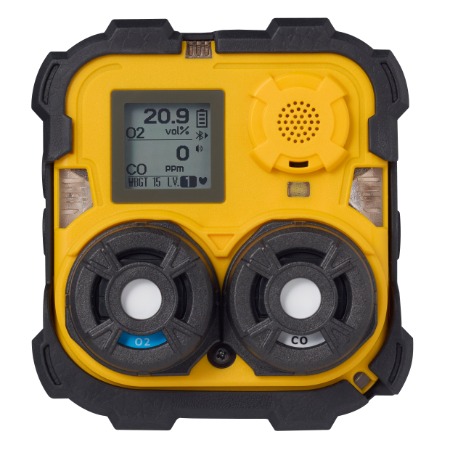
Read O₂, CO or H₂S concentrations directly on the display, according to the fitted sensors. Dual-gas models monitor oxygen and a toxic gas at the same time.

NOVEL · Personal gas detection
Personal gas monitoring with an estimated WBGT display.
A built-in temperature and humidity sensor calculates an estimated WBGT value. A five-level display provides guidance for heat-stress awareness in the field.
The New Cosmos NXA-D is a wearable personal gas detector for monitoring oxygen (O₂), carbon monoxide (CO) and hydrogen sulfide (H₂S) hazards. Depending on the configuration, it monitors a single gas or O₂ + CO / O₂ + H₂S and provides voice, buzzer, flashing light and vibration alarms.
Made in Japan and sourced from Japan by NOVEL, the NXA-D combines a rechargeable battery with user-replaceable sensor modules. Competitive pricing makes it a capable, cost-effective choice for personal gas detection.
A built-in temperature and humidity sensor calculates an estimated WBGT value. A five-level display provides guidance for heat-stress awareness in the field.
The estimated WBGT display helps workers follow conditions relevant to heat stress. A numerical value and LV.1–LV.5 indications are shown on the detector screen.
| Level | Estimated WBGT (°C) |
|---|---|
| LV.1 · Almost Safe | <21 |
| LV.2 · Caution | 21–<25 |
| LV.3 · Warning | 25–<28 |
| LV.4 · Severe Warning | 28–<31 |
| LV.5 · Danger | ≥31 |
WBGT is estimated from temperature and humidity and is used as a guide. Wearing position, body temperature, sweating and leather cases can affect the display. Allow the reading to stabilize after environmental changes and keep the sensor port clean and dry. Formal heat-stress assessments use a WBGT measurement method and instrument appropriate to the application.
Read O₂, CO or H₂S concentrations directly on the display, according to the fitted sensors. Dual-gas models monitor oxygen and a toxic gas at the same time.
Voice announcements, a buzzer, flashing alarm lights and vibration activate when a gas alarm threshold is reached.
A rechargeable battery and replaceable sensor modules support continued use of the detector body. The recommended sensor replacement interval is three years.
When ordering, replace XX in NXA-D-XX with the applicable gas code below. For example, the full ordering code for oxygen and carbon monoxide is NXA-D-D1. Include the full code, target gases and quantity in your quotation request.
| Ordering code | Oxygen O₂ | Carbon monoxide CO | Hydrogen sulfide H₂S | Sulfur dioxide SO₂ | Methane CH₄ | Carbon dioxide CO₂ | Status / Quote |
|---|---|---|---|---|---|---|---|
NXA-D-D1 | ✓ | ✓ | — | — | — | — | Request a model quote |
NXA-D-D2 | ✓ | — | ✓ | — | — | — | Request a model quote |
NXA-D-S1 | ✓ | — | — | — | — | — | Request a model quote |
NXA-D-S2 | — | ✓ | — | — | — | — | Request a model quote |
NXA-D-S3 | — | — | ✓ | — | — | — | Request a model quote |
NXA-D-S4 | — | — | — | ✓ | — | — | Manufacturer announcement · Coming soon |
NXA-D-S5 | — | — | — | — | ✓ | — | Manufacturer announcement · Coming soon |
NXA-D-S6 | — | — | — | — | — | ✓ | Manufacturer announcement · Coming soon |
✓ Target gas for the model. S4, S5 and S6 are announced by the manufacturer as “coming soon”. Confirm current supply status with NOVEL before ordering. Add the AD-101 charging adapter to your first detector order.
Select accessories using their full part codes to suit your application. Order the dedicated AD-101 AC adapter separately with the first detector purchase.
| Code | Accessory | Use / Compatibility |
|---|---|---|
AD-101 | Dedicated AC adapter | For charging NXA-D; approximately 1 m cord. Order separately with the detector. |
NXA-xL | Log data collection software | Collect and delete logs and change detector settings on a PC using infrared communication. |
C-41 | Heat-resistant leather case | For O₂ and CO sensors: NXA-D-D1, NXA-D-S1 and NXA-D-S2. |
C-42 | Standard leather case | Protective case for NXA-D; the manufacturer’s brochure lists compatibility with all gas types. |
ST-26 | Attachment clips | For attachment to a helmet or belt. |
ST-11 | Arm belt | For wearing the detector on the arm. |
ST-23 | Harness attachment buckle | For attaching the detector to a full-body safety harness. |
| Code | Accessory | Use / Compatibility |
|---|---|---|
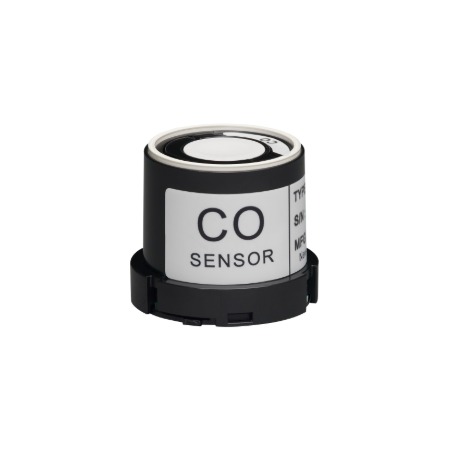
CDS-300 (O₂ / CO / H₂S) | Pre-calibrated sensor module | Specify the target gas together with CDS-300 when ordering. Recommended sensor replacement interval: three years. |
ST-25 | Alligator clip | Detector attachment clip. |
FE-143 | Sensor filter | One replacement filter. |
FE-144 | Charcoal filters | Two filters for the CO sensor module. |
SPF-4 | Screen protectors | Two protective films. |
A USB Type-A charging cable is announced by the manufacturer as “coming soon”.
| Target gases | O₂, CO and H₂S; single or dual-gas monitoring according to configuration |
|---|---|
| Sensor and sampling | Electrochemical sensor; diffusion sampling |
| Detection ranges | O₂: 0–25.0 vol% · CO: 0–300 ppm · H₂S: 0–30.0 ppm |
| Display resolution | O₂: 0.1 vol% · CO: 1 ppm · H₂S: 0.1 ppm, within the detection range |
| Response time, T90 | O₂: ≤20 seconds · CO and H₂S: ≤30 seconds; ambient temperature 20 ±2 °C |
| Alarms | Voice, buzzer, red flashing light, LCD indication and vibration; time-weighted average (TWA) / short-term exposure limit (STEL) displays for toxic gases |
| Heat-stress indication | A built-in temperature and humidity sensor calculates an estimated WBGT value. A five-level display provides guidance for heat-stress awareness in the field. |
| Battery | Built-in rechargeable lithium-ion battery |
| Operating time per charge | With an O₂ sensor: approximately 2,000 hours; CO-only or H₂S-only: approximately 4,000 hours¹ |
| Charging accessory | Dedicated AD-101 AC adapter, ordered separately with the detector |
| Recommended sensor replacement | 3 years, alongside annual calibration and routine checks |
| Operating environment | −20 to +50 °C; 15–85% RH; non-condensing |
| Dimensions and weight | Approximately 78 × 85 × 46 mm and 155 g, excluding the alligator clip |
| Ingress protection | IP66 / IP68 equivalent; manufacturer’s test: 2 m in still water for 90 minutes² |
| Compliance and certification | CE marking; ATEX, IECEx and JPEx. ATEX: II 1G Ex ia IIC T4 Ga; IECEx / JPEx: Ex ia IIC T4 Ga |
| Manufacturing and supply | Made in Japan; sourced from Japan by NOVEL |
¹ Approximate operating times at 25 °C with no alarm activity, backlight and data logging switched off. Actual duration depends on use, environmental conditions and storage.
² The ingress rating describes a new detector’s housing under the manufacturer’s specified test conditions. Keep sensor inlets clean and dry during use.
Additional service display ranges: O₂ 25.1–50.0 vol%; CO 301–2,000 ppm; H₂S 30.1–150 ppm. Readings in these ranges are provided for guidance.
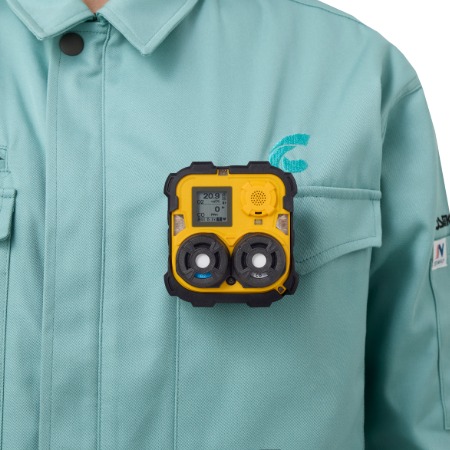
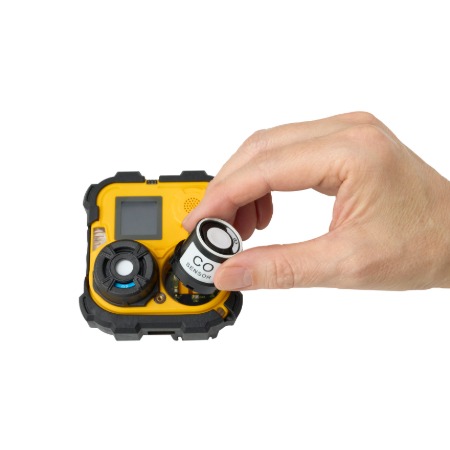
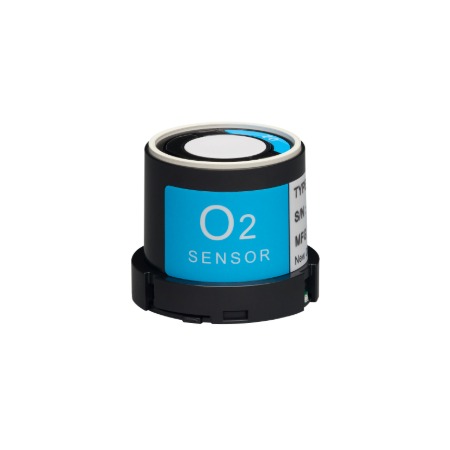
The manufacturer’s official video presents the NXA-D housing, replaceable sensors and estimated WBGT display.
The NXA-D estimates WBGT from built-in temperature and humidity sensing and displays five warning levels. Values provide guidance for heat-stress awareness; consider wearing position, body temperature, sweating and leather cases.
The built-in lithium-ion battery is charged using the dedicated AD-101 AC adapter. Order the adapter separately with the first detector purchase. Charge the unit in a non-hazardous area.
The recommended sensor replacement interval is three years. Pre-calibrated sensor modules can be replaced by the user by following the instruction manual. Annual calibration and pre-use checks form part of the maintenance plan.
Select H₂S / O₂ monitoring for wastewater and sewer work, or CO / O₂ monitoring for steel plants, maintenance work and industrial operations, as appropriate. Choose sensors and alarm settings according to the site risk assessment.
NOVEL technical support
A draft opens in your email client with the subject header of the relevant product or category.