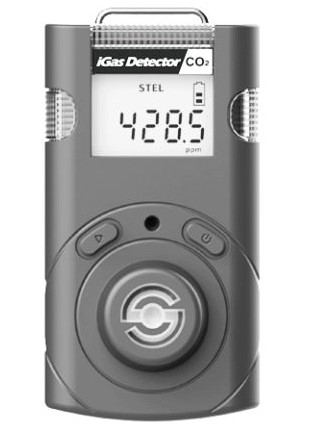
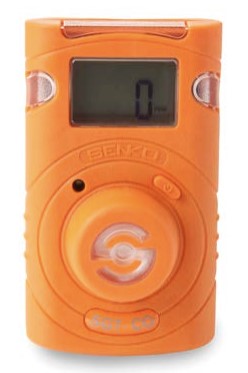
Product Specifications
RESISTANT AGAINST ALL ADVERSE FIELD CONDITIONS: The SGT Personal Single-Gas Detector has a highly compact, lightweight, yet extremely rugged construction against adverse field conditions (highly resistant to water and dust with high IP67 ingress protection!). Furthermore, the instrument is certified for use in ATEX - IECEx explosion-risk areas.
NOMINAL 24-MONTH OPERATION WITHOUT CHARGING: The SGT is a disposable, maintenance-free model requiring no charging or battery/sensor replacement. This feature does not eliminate the requirement for routine functional (bump) testing and sensor-specific calibration checks. Manufacturer guidelines and site procedures must be observed prior to use.
VISUAL-AUDIBLE-VIBRATING WARNING ALARMS:The instrument provides loud (>90dB), illuminated visual, and vibrating alarms that inform the worker of dangerous conditions during a gas leak. Alarm levels can be configured across multiple stages by the user as required.
DATA LOGGING: The instrument can store over 30 alarms in memory based on detection date. Data can be downloaded to a PC via an external IR kit for reporting
HIGH SALES VOLUME: Our high-safety instrument is one of the top-selling gas detector models in Europe, being both economical and high quality. With continuous device availability in both our stock and the manufacturer portfolio, it prevents disruptions during procurement, which is particularly critical for the marine industry.
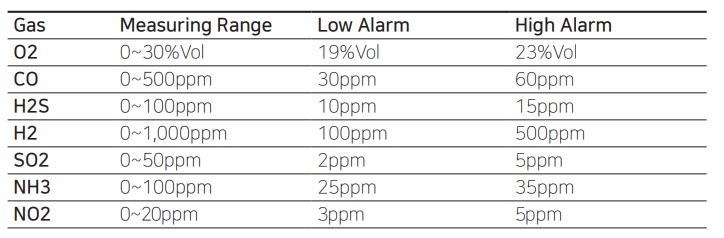
*O2=Oxygen --- For measurements arising from oxygen deficiency; it is among the most critical chemicals to measure in clip-on gas detectors.
*CO=Carbon Monoxide --- An increase in carbon monoxide generated by combustion poses a vital risk to workers; measurement is critical.
*H2S=Hydrogen Sulphide --- Hydrogen Sulphide is a colourless, flammable, strongly odorous, corrosive, and highly toxic gas. Used across numerous industrial applications, this chemical impacts worker health even at low concentrations. Elevated levels of this chemical can be found in facilities such as biogas production plants, sewerage, and wastewater treatment plants. The gas may also be encountered in the chemical, petroleum, pesticide spraying, and agricultural industries. For H2S, the TWA (Time Weighted Average exposure value) is 5ppm, and the STEL (Short Term Exposure Limit) is 10ppm. It has an immediately fatal effect above 100ppm.
*H2=Hydrogen --- Hydrogen is the lightest and most abundant flammable gas in the world, being colourless and odourless. Hydrogen gas also exerts an asphyxiating effect. Excessive inhalation can lead to loss of consciousness. Due to its high flammability risk, hydrogen gas can be measured in ppm and %LEL.
*SO2=Sulphur Dioxide --- Sulphur dioxide is a pungent, colourless, non-flammable, toxic gas. It can be found extensively in the Chemical, Food (Beverage), Agriculture, and Pharmaceutical sectors. For this highly toxic gas, the TWA (Time Weighted Average exposure value) is 2ppm, and the STEL (Short Term Exposure Limit) is 5ppm.
*NH3=Ammonia --- Ammonia is a pungent, colourless, highly toxic gas that is flammable and explosive at high concentrations. With a very wide range of applications, this chemical is used in fertiliser manufacturing, paint, pharmaceutical, and perfume production, petroleum refineries, tyre manufacturing, certain cleaning products, and as a refrigerant in industrial plants. The TWA (Time Weighted Average exposure value) is 25ppm, and the STEL (Short Term Exposure Limit) is 30ppm.
*NO2=Nitrogen Dioxide --- Nitrogen dioxide is a pungent, oxidising, and highly toxic gas. Nitrogen dioxide gas is a chemical released as a result of the combustion of fossil fuels (gas, coal, and oils) that directly affects human health. Because it is formed by combustion, it is prevalent across all industries. The TWA (Time Weighted Average exposure value) is 5ppm.