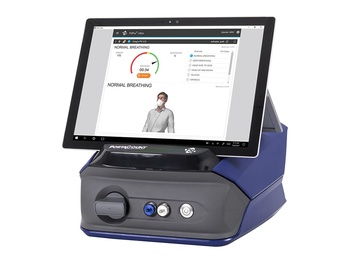
TSI PortaCount™ 8040 and 8048 Respirator Fit Test System – Respirator Fit Test Instruments
System for assessing the fit of tight-fitting respirators to the user via quantitative fit testing.

NOVEL · Product family
Respirator fit test kits are used to assess the fit of tight-fitting respiratory protective devices to the wearer. Explore category details on quantitative fit testing and system selection.
System for assessing the fit of tight-fitting respirators to the user via quantitative fit testing.
The correct product family is selected by jointly defining the measurement purpose, site conditions, data requirements and the method to be used. The following sections explain selection and implementation planning for respirator fit test kits.
A fit test assesses the fit of a specific respirator model and size on a specific wearer. The objective is to make the seal of the facepiece measurable or evaluable according to the selected method. Respirator selection, don/doff training and test records are complementary components of a respiratory protection programme.
The respirator type used, filter class, test method and test throughput capacity must be determined. Sampling adaptors, required accessories, software and record management are also part of system selection. It should not be assumed that instruments or kits within the same product family have identical respirator coverage and scope of delivery.
The test assesses the fit between the wearer and the respirator under defined conditions. Donning practice and conditions of use may vary thereafter. The test record must be retained alongside details of the respirator model, size and method used; product details and model coverage should be reviewed on the respective product page.
The test plan must define the respirator type, model and size used, wearer record and the protocol to be applied. A fit test evaluates a specific individual with a specific respirator. The respirator range supported by the test system and required accessories must be verified against manufacturer documentation.
Ambient conditions and instrument preparation required for quantitative testing must be planned. Connection arrangements to the respirator, daily instrument checks and operator training are also part of the process. A record-keeping workflow capable of storing wearer, respirator, test date and protocol details together is selected based on operational requirements.
Quantitative fit testing is an approach that assesses respirator fit with a numerical result. The result is interpreted in conjunction with the selected test method, respirator and wearer.
Not necessarily. Facial characteristics, respirator model and sizing variations affect suitability for the wearer. Fit testing helps evaluate this match.
No. A fit test focuses on the seal between the wearer and the facepiece. Filter performance is a separate characteristic; selecting an appropriate fit test system also takes respirator and filter type into account.
The choice is made based on the required adaptors, accessories, software and computer or tablet provision. A kit designation does not imply that all components are identical across every configuration; scope of supply should be reviewed on the product page.
The fit factor is a result used in quantitative fit assessment. Pass/fail criteria are evaluated in conjunction with the applied protocol and respirator category. Values obtained under different test conditions should not be directly equated; wearer, respirator combination and protocol details must be retained in the test record.
The test system and protocol must support the relevant respirator type. Tight-fitting and loose-fitting respiratory protective devices do not share the same evaluation approach. Compatibility of required connections, probes and accessories with the respirator and test method must be verified in advance.
The result applies solely to the tested wearer and respirator combination. When the model, size or conditions affecting fit change, re-test requirements of the applicable programme must be evaluated. A result obtained with another respirator does not directly demonstrate the fit of the new combination.
The user seal check performed by the wearer upon donning the respirator and a protocol-based fit test are distinct procedures. One is not an automatic substitute for the other. The facility's respiratory protection programme must define both practices alongside training and test records.
NOVEL technical support
A draft opens in your email client with the subject header of the relevant product or category.