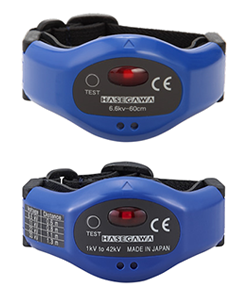
Hasegawa HXW-6W / HXW-6WL Low-Medium Voltage Wearable-Wrist Type Voltage Detector
Wearable device intended to provide an alert regarding the presence of voltage under manufacturer-defined operating conditions.

NOVEL · Product family
Electrical safety and leakage detectors cover various instrument groups for voltage detection and electrical inspection tasks. Explore product options suited to your application.
Wearable device intended to provide an alert regarding the presence of voltage under manufacturer-defined operating conditions.
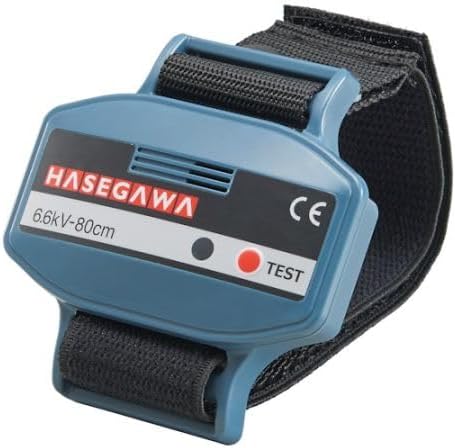
Wearable device intended to provide an alert regarding the presence of voltage under manufacturer-defined operating conditions.
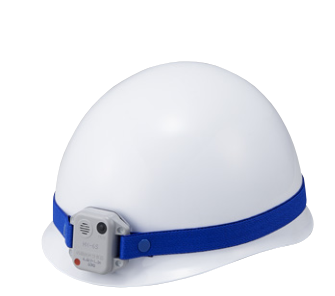
Wearable device intended to provide an alert regarding the presence of voltage under manufacturer-defined operating conditions.
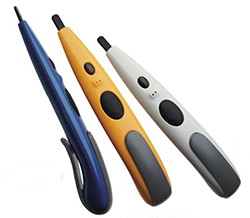
Detector intended for voltage verification in suitable electrical applications.

Detector intended for voltage verification in suitable electrical applications.
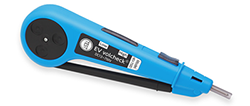
Detector intended for voltage verification in suitable electrical applications.
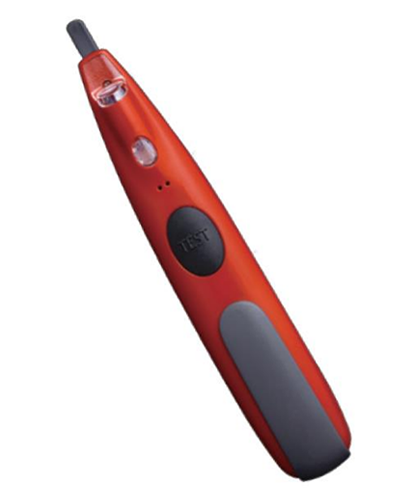
Hasegawa HTE-610L series with LED illumination, intended for checking the presence of low voltage.
The correct product group is selected by defining the measurement objective, site conditions, data requirements, and the method to be used together. The sections below explain the selection and application planning for OHS - electrical safety and leakage detectors.
Wearable voltage warning devices and voltage detectors used for direct contact testing perform distinct tasks. Voltage presence, non-contact field detection, and leakage-related testing tasks are not the same measurement. The required function must be defined to select the appropriate instrument group and method of use.
AC or DC system, voltage level, working clearance, site conditions, and the method of instrument deployment must be determined. Power generation facilities, maintenance work, and electric vehicle applications may create different requirements. The scope or suitability of one model must not be automatically assumed for other devices within the same product family.
The manufacturer's intended use, operating limitations, and check requirements of the instrument are evaluated in conjunction with the working procedure. A wearable warning device must not be assumed to replace dead testing (verification of the absence of voltage) or other electrical safety steps. The category page introduces the product group; detailed scope should be reviewed in the product documentation.
Detecting the presence of voltage and evaluating leakage current or insulation condition are distinct tasks. The user must first define which parameter and which connection arrangement are to be checked. The category name does not imply that all instruments perform every one of these functions.
Instrument functional checks, the working environment, and manufacturer limits are evaluated together. In a wearable warning configuration, positioning and electric field conditions become critical, whereas in direct testing, the contact configuration is paramount. The device must be selected in accordance with the defined operating procedure for trained personnel.
No. Wearable devices are intended to provide an alert under manufacturer-defined conditions. The instrument and procedure to be used for voltage verification must be evaluated separately.
This capability must not be assumed. The AC and DC compatibility, voltage range, and application method of the instrument must be verified from the manufacturer data for the relevant model.
DC sources, connection points, and application conditions require separate evaluation. It should not be assumed that a general field detector is suitable for all electric vehicle testing tasks.
AC/DC system, voltage level, working environment, and the intended testing task must be specified. The method of use and suitability defined by the manufacturer are also taken into account during selection.
Particularly with non-contact or wearable warning systems, the absence of an alarm must not be used as a substitute for dead testing (proving dead). Detection range can depend on model, position, and environmental conditions. Appropriate instruments and defined procedures for proving dead must be evaluated separately.
No. Checking for voltage presence, measuring leakage current, and evaluating insulation address different electrical questions. An instrument detecting voltage does not indicate that it measures leakage current. The target inspection parameter and application arrangement must be clarified at the start of product selection.
The manufacturer-defined detection scope and operating limitations must be checked. Field structure, instrument orientation, and equipment geometry can affect detection. Suitability for a specific site must not be automatically transferred to other electrical applications; the technical documentation of the relevant model should be consulted.
Alongside the voltage level, AC/DC capability, method of deployment, environmental conditions, and testing task are required. Direct contact measurement, non-contact sensing, and wearable alerting are evaluated separately. Manufacturer operating limits and mandatory functional checks should also be incorporated into the selection process.
NOVEL technical support
A draft opens in your email client with the subject header of the relevant product or category.