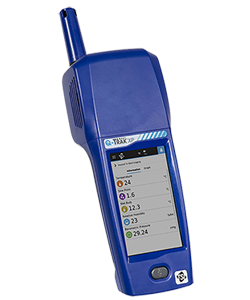
TSI Q-Trak™ XP 7585 – Multi-Gas and Particulate Air Quality Monitor
Multi-parameter monitor for evaluating gas, particle, and environmental data in indoor air quality studies.

NOVEL · Product family
Multi-parameter instruments assist in evaluating gas and particulate data alongside ambient conditions. Compare suitable instrument groups for gas, PM, dust, and aerosol monitoring.
Multi-parameter monitor for evaluating gas, particle, and environmental data in indoor air quality studies.
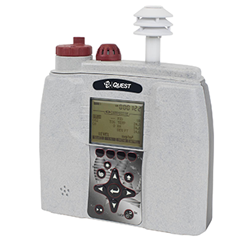
Multi-parameter monitor for evaluating gas, particle, and environmental data in indoor air quality studies.
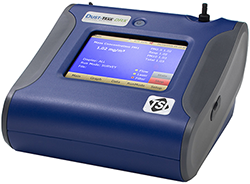
Monitor for real-time monitoring of variations in dust and aerosol levels.
The correct product group is selected by defining the measurement objective, site conditions, data requirements, and the method to be used together. The sections below explain the selection and application planning for multi-parameter gas, PM, dust, and aerosol monitoring instruments.
Monitoring multiple quantities simultaneously in indoor air and occupational hygiene studies helps in comparing variations over time. Monitors combining gas-particulate measurement with ambient conditions, as well as instruments monitoring multiple aerosol fractions, fall into this category. It should not be assumed that every instrument measures the same parameters.
Gas concentration, particle number concentration, and aerosol mass concentration are distinct measurement results. PM fractions also provide evaluations relating to specific size fractions. Logging them simultaneously provides comparison opportunities; however, distinct quantities must not be interpreted as a single measurement.
Target gases, particulate measurement requirements, measurement duration, and ambient conditions must be determined. Data logging, time synchronisation of measurements, calibration, and sensor maintenance requirements are planned concurrently. The parameters supported by the model and the configuration of installed sensors should be verified from the detailed product page.
Gases and particulate fractions to be monitored should be listed first. The measurement range, required time resolution, and sampling point for each parameter are evaluated separately. Not all channels of a multi-parameter instrument may be present together in every configuration; system scope must be confirmed at the quotation stage.
Logging channels on the same timeline facilitates comparison with production and ventilation variations. Fixed or portable use, power supply, and connectivity requirements are planned. To ensure data validity, measurement location, operational activities, and sensor maintenance records must also be maintained.
No. Gas measurement capability is limited to the sensors supported and fitted to the instrument. Desired gases must be determined at the beginning of system selection.
No. PM channels are intended for monitoring aerosol fractions, whereas gas sensors are designed for measuring specific gases. Being in the same category does not make their functions equivalent.
It depends on the measurement requirement. While certain tasks can be addressed with a single instrument, others may require different measurement methods or sampling systems used in combination.
It helps in comparing variations within the same time interval. In interpreting the results, the sampling point, operating conditions, and the scope of the sensors used must also be taken into account.
No. PM channels relate to particulate fractions; gas measurement requires different sensors. Which fractions are reported and the measurement principle are checked against the instrument specification. Their display on the same screen does not imply that all results represent the same quantity or unit.
Real-time monitoring helps in investigating the timing and trends of variations. Sampling and analysis may be required for chemical composition or gravimetric mass evaluation by a specific reference method. The required outcome determines whether monitoring and sampling are to be used together.
Sensors and measurement principles may have different maintenance requirements. Gas channel verification and optical path maintenance are not the same procedure. The operating plan must evaluate the manufacturer instructions, maintenance schedule, and data continuity during maintenance separately for each channel.
Units, measurement principles, time intervals, locations, and instrument settings should be compared. Gas and aerosol results are not alternatives for the same measurement. Aerosol data may also vary depending on particle characteristics and the measurement approach; cross-instrument comparisons must be planned systematically.
NOVEL technical support
A draft opens in your email client with the subject header of the relevant product or category.