
LSI Lastem HeatShield WBGT
Measurement system for thermal environment, WBGT and heat stress assessments.

NOVEL · Product family
Thermal comfort and heat stress measuring instruments assist in evaluating temperature, humidity and thermal environmental conditions. Review instrument ranges suited to your working environment and evaluation objective.
Measurement system for thermal environment, WBGT and heat stress assessments.
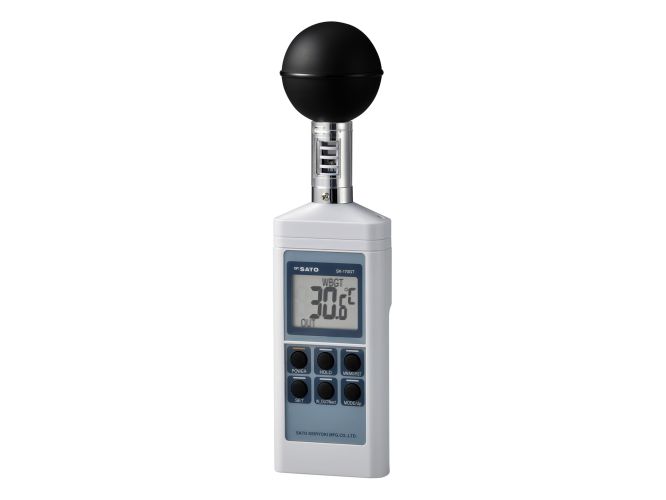
WBGT and heat stress meter used in evaluating hot work environments.
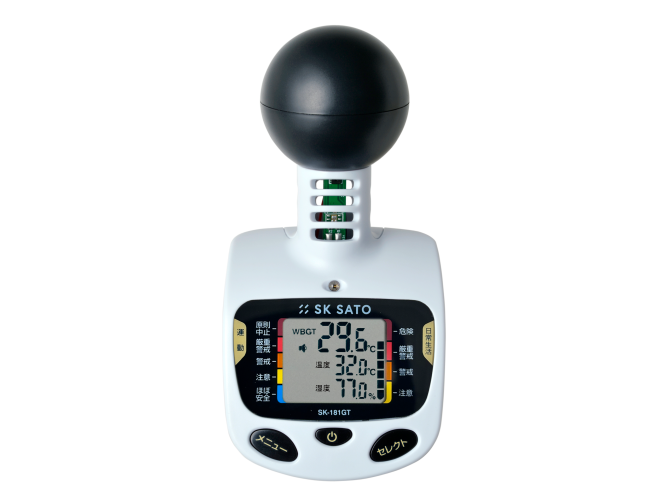
WBGT and heat stress meter used in evaluating hot work environments.
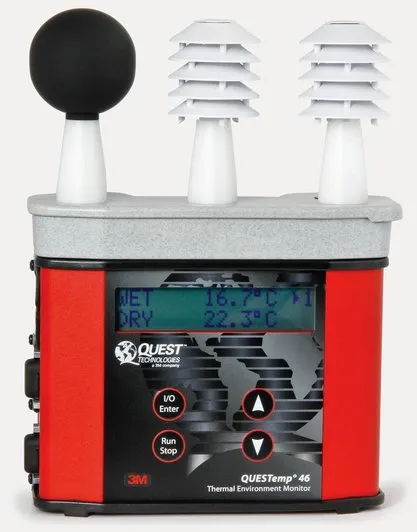
WBGT and heat stress meter used in evaluating hot work environments.
The correct product family is selected by jointly defining the measurement purpose, site conditions, data requirements and the method to be used. The following sections explain selection and implementation planning for thermal comfort and heat stress instruments.
Thermal comfort relates to how an individual perceives the thermal conditions of their indoor environment. Heat stress assessment, conversely, focuses on evaluating thermal strain in hot industrial workplaces. Measuring ambient air temperature alone therefore does not satisfy all assessment requirements; the evaluation method and required environmental parameters must be defined together.
Air temperature, relative humidity, air velocity and mean radiant heat define the thermal environment of a workplace. Measurement objectives differ across diverse settings such as foundries, production lines, open-air worksites and offices. Work patterns, evaluation duration and representative sampling locations are also central to planning.
Indoor or outdoor location, hot or cold conditions, measurement run time and target assessment criteria are established. Required sensors and data logging must match the chosen standard methodology. Whether an instrument supports thermal comfort, WBGT or other indices depends on the specific model and sensor configuration; review details on the product page.
When assessing hot environments, metabolic work rate, clothing insulation and work-rest cycles must be specified alongside raw instrument readings. Sampling points are chosen to capture various manufacturing stages and fluctuations throughout the shift. Survey logging should enable combined interpretation of ambient metrics and work tasks.
Solar radiation, hot surfaces, air draughts and local heat sources can bias sensor readings. Sensors must be positioned and stabilised in accordance with manufacturer instructions. Sensors, accessories and data recording provisions required by the target standard must be verified prior to procurement.
WBGT (Wet Bulb Globe Temperature) is an index used to evaluate environmental heat stress on workers. Its application differs from standard air temperature measurement; sensor setup and result interpretation are handled according to the selected standard method.
It is not sufficient for all assessments. Other environmental factors, including air velocity and radiant heat, also influence the evaluation. Required parameters are chosen according to the assessment objective.
If the instrument's sensor configuration and operating specifications permit, it may be deployed across different environments. Ambient suitability and measurement methodology should be verified for each model.
The workplace setting, target evaluation standard, measurement points, duration, logging requirements and required sensors must be specified. This information helps configure the correct system.
Their objectives differ. Investigating comfort in an office and assessing thermal strain in hot industrial operations require different variables and interpretation criteria. One should not assume the same instrument configuration is suitable for both without defining required sensors, operating conditions and reporting needs.
Where environmental conditions fluctuate over time, a single instantaneous reading provides limited insight. Logging across production cycles, outdoor weather variations and work shifts is often essential. Survey periods should represent typical operational tasks, with results reported alongside timestamp and location data.
Requirements depend on the selected evaluation protocol. Sensors for air temperature, humidity, radiant heat and air velocity, as well as mounting and logging accessories, must be planned together. A package designation does not automatically mean all accessories for every supported index are included.
Environmental data is one input into the decision-making process. Workload, clothing insulation, worker acclimatisation and the applied safety standard are evaluated alongside it. The value on the display must not be construed as a universal, static work-rest schedule across all operations.
NOVEL technical support
A draft opens in your email client with the subject header of the relevant product or category.