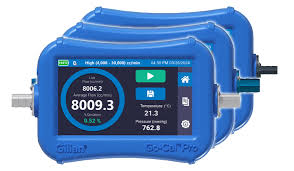
Gilian Go-CAL PRO – High-Precision Portable Air Flow Calibrator
Calibrator for verifying flow in air sampling and laboratory applications.

NOVEL · Product family
Air flow rate calibrators and mass flowmeters are used for verifying sampling flow and monitoring gas flow rate. Explore instrument groups suitable for field and laboratory requirements.
Calibrator for verifying flow in air sampling and laboratory applications.
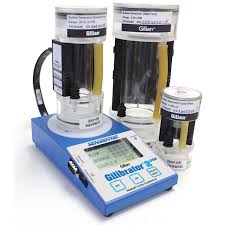
Calibrator for verifying flow in air sampling and laboratory applications.
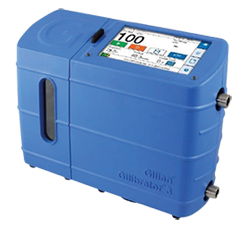
Calibrator for verifying flow in air sampling and laboratory applications.

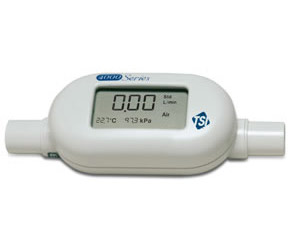
Mass flowmeter for measuring and monitoring gas flow rate in laboratory and industrial applications.

Mass flowmeter for measuring and monitoring gas flow rate in laboratory and industrial applications.
For flow verification of sampling pumps and air samplers in the 2.5–300 L/min range.
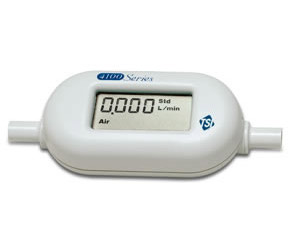
For flow verification in low-flow air sampling applications in the 0.01–20 L/min range.
The correct product group is selected by jointly defining the measurement objective, site conditions, data requirements, and the method to be used. The topics below explain the selection and application planning for air flow rate calibrators and mass flowmeters.
A flow calibrator meets the need for reference measurement to verify the flow rate of a sampling or measurement system. Mass flowmeters are used for measuring and monitoring gas flow. Their presence in the same category does not mean that reference calibration and continuous process measurement are the same task.
Portability, flow range, gas type, connections, and recording requirements differ according to application. In sampling pump verification, the sampling line is evaluated, whereas in process measurement, pressure, temperature, and gas conditions are evaluated separately. The measurement principle and scope of use of the selected instrument must be compatible with these requirements.
The gas measured, flow rate unit, reference conditions, and measurement arrangement must be recorded. Volumetric flow results and flow results expressed according to reference conditions should not be interpreted under the same assumptions. Accuracy, calibration, and data transfer requirements are evaluated on the detailed product page.
Tubing, connection diameter, flow direction, and potential leaks must be considered together with the measurement arrangement. Permissible pressure and gas compatibility must be checked separately for instruments to be connected to a process line. Portable pump verification and measurement in a pressurised line should not be assumed to be the same setup.
Required accuracy, calibration certification, and traceability requirements are defined prior to procurement. The recording format, measurement unit, and gas conditions must be maintained in the report. When comparing the flow rate on the instrument display with the reference instrument result, identical conditions and flow arrangements must be used.
The intended use and technical scope must be verified. If the flow range, gas compatibility, and reference verification requirements are not suitable, it may not fulfil the same function.
The instrument must be capable of measuring the target flow rate under suitable conditions. The operating range of the pump or process is evaluated together with the scope of the calibrator or flowmeter.
Yes. Depending on the measurement principle, gas properties and reference conditions may affect the result. Instrument selection and result interpretation must be carried out using this information.
The gas to be measured, target flow range, pump or process application, connections, site conditions, and recording requirements must be specified.
Flow expressed according to reference conditions and volumetric flow under actual conditions may differ. The unit symbol alone may not explain all assumptions. Results must be compared with knowledge of temperature, pressure, and the manufacturer's reference conditions.
This depends on the measurement principle and the gases supported by the manufacturer. In certain measurements, gas properties or the selected gas setting are critical. An instrument known to be suitable for air should not be assumed to give the same result with a different gas; the technical scope must be verified.
A calibrator provides measurement to compare or verify flow rate; adjusting the pump is a separate procedure. The check, adjustment, and documentation recorded must be clearly stated. Connecting to a reference measurement instrument does not in itself indicate that the entire calibration process has been completed.
Measurement performance at the target flow rate and application compatibility are more decisive. Gas type, connections, pressure conditions, and recording requirements are evaluated together. Looking solely at the highest capacity may not meet low-flow or reference measurement requirements.
NOVEL technical support
A draft opens in your email client with the subject header of the relevant product or category.