
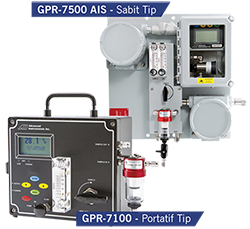
Manage invisible toxic gas risks with the correct technology. For the detection and analysis of hydrogen sulphide (H₂S), carbon monoxide (CO), ammonia (NH₃), chlorine (Cl₂), and speciality gases used in semiconductor manufacturing, NOVEL provides fixed detector, portable gas detector, and industrial process analyser options together.
Although the requirement may appear identical, the appropriate solution differs: plant safety with fixed alarms , field inspection with portable leak screening , and gas quality and treatment tracking with ppm process analysis . The measuring range, sensor, and certification suited to the gas type and application are determined together with NOVEL.
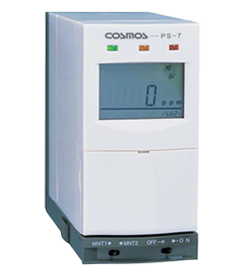
New Cosmos PS-7 – Fixed Toxic and Semiconductor Process Gas Detector
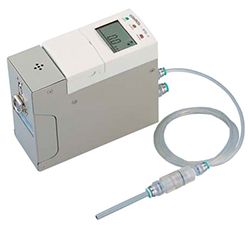
New Cosmos XPS-7 / XPS-7II – Portable Toxic and Speciality Gas Leak Detector
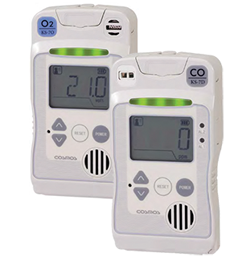
New Cosmos KS-7D / KS-7 Series – Fixed Carbon Monoxide (CO) Alarm Detector
Toxic Gas Detector Selection Guide
Target Gas and Sampling Method
CO, H₂S, NH₃, Cl₂, PH₃, and other speciality gases require different sensors and measuring ranges. Selecting between a diffusion-type fixed detector and a pumped/sampling-line analyser should be made according to the location to be monitored and the anticipated leak scenario.
Facility Alarm, Portable Inspection, and Process Measurement
Fixed gas detectors are evaluated for continuous area safety; portable detectors for pinpoint leak checks; and sample-based gas analysers for process gas quality and sweetening. Multiple instruments may need to be deployed together for different functions.
Sensors, Certification, and Calibration
Electrochemical, semiconductor, and speciality gas sensors are selected according to target gases. Cross-sensitivity, flow rate, alarm outputs, sensor replacement, maintenance, and Ex/ATEX suitability must be verified prior to quotation. No certification should be assumed automatically across all models.
Which Facilities in Türkiye Use Them?
Organised industrial zone gas infrastructures, energy and petrochemical plants, treatment facilities, laboratories, semiconductor manufacturing, boiler houses, and other industries utilizing process gases require toxic gas detection solutions tailored to site risks. NOVEL provides support for instrument selection, commissioning, training, and appropriate maintenance/calibration planning.
Measurement Principle and Safety
Why Are Toxic Gas Detectors Used?
CO, H₂S, NH₃, Cl₂, and similar toxic gases can pose risks to worker health even at low concentrations. Detection and analytical systems monitor the concentrations of these gases to provide measurement data for alarms, process control, or exposure assessment.
How to Select Sensors and Measuring Ranges?
The target gas, expected concentration, cross-sensitivities, temperature-humidity conditions, and alarm objective must be evaluated together during sensor selection. In occupational safety applications, relevant toxic gas performance standards and hazardous area requirements must be verified independently.
Frequently Asked Questions About Toxic Gas Detectors
What is the difference between a toxic gas detector and a toxic gas process analyser?
Toxic gas detectors are selected for safety alarms against gas escapes in an area or around personnel. Process analysers measure H₂S or other component concentrations within a sample drawn from a line for process control, quality monitoring, or scrubbing verification. The two instrument classes cannot be used interchangeably as a matter of course.
Which NOVEL instrument is suitable for H₂S (hydrogen sulphide)?
For H₂S analysis in natural gas and industrial process samples, the AII GPR-7100/GPR-7500 family can be examined. Where a facility requires fixed leak monitoring, a PS-7 configured for the target gas or another fixed gas detection system is evaluated. For worker alarming, a dedicated personal gas detector may be required.
How are ammonia (NH₃), chlorine (Cl₂), phosphine (PH₃), or silane (SiH₄) leaks monitored?
For semiconductor or chemical process gases, the New Cosmos PS-7 and suitable portable XPS-7II range can be evaluated. Sensor/cartridge type, gas to be detected, measuring range, alarm threshold, and operating conditions must be determined individually for each target gas.
How to choose between the fixed PS-7 and portable XPS-7II?
The PS-7 is a fixed solution for continuous leak monitoring at a specific point in the plant. The XPS-7II is a portable detector for maintenance, verification, and pinpoint inspection. Where continuous alarming is required at critical locations, a portable instrument alone may not be sufficient.
Has the New Cosmos XPS-7 been discontinued, and what is the new model?
Yes. In the manufacturer's current catalogue, the XPS-7 is designated as a legacy model, and the XPS-7II belongs to the active family. The appropriate sensor module and supply conditions for the relevant gas must be confirmed with NOVEL.
What is the current replacement for the XP-333 and XP-333IIA?
Does the KS-7 series measure CO, O₂, and CO₂ simultaneously?
No. The KS-7D for CO, KS-7O for O₂, and KS-7R for CO₂ are discrete models. If multiple gas hazards exist, suitable models and sampling points are planned in combination. This series is not suitable for ATEX/Ex hazardous areas.
What information should be provided to NOVEL when selecting a gas detector?
Target gas/gases, expected ppm or % volume range, intended use (fixed alarm, personal safety, or process analysis), operating temperature and humidity, gas sample pressure, ATEX zone classification (if any), alarm/PLC connections, and maintenance-calibration expectations are critical for selection.
Manufacturer Resources and Current Model Information
For model selection, production status, and gas sensor compatibility, the manufacturer's current technical publications should be reviewed alongside the NOVEL product pages.